


 Whatsapp
  X
X  Mail
Mail  Copy link
 Soil pH Guide
Soil pH is one of the first values many turf managers look at when reviewing a soil analysis, yet it's often one of the least understood.

On this page:
It’s easy to see a pH value that’s lower or higher than expected and assume it needs correcting. In reality, soil pH is best viewed as a starting point rather than a problem in itself.
It provides important context for interpreting the rest of the soil analysis and understanding how the rootzone is likely to behave.
Rather than asking, “How do I change my soil pH?”, the better question is often,
“What is this pH telling me about my soil, and how should it influence my management decisions?”
What is soil pH?
Soil pH is a measure of how acidic or alkaline the soil is.
The pH scale ranges from 1 to 14, with 7 considered neutral. Values below 7 are acidic, while values above 7 are alkaline. Because the scale is logarithmic, even a change of one pH unit represents a significant difference in soil conditions.
For turf managers, however, the chemistry is less important than understanding what the number means in practice. Soil pH influences how the soil functions and provides valuable context for interpreting nutrient levels, biological activity and the wider growing environment.
Why does soil pH matter?
A soil analysis contains a lot of information, but individual results should never be viewed in isolation.
Soil pH helps put the rest of the report into context. Before deciding whether phosphorus is low, potassium is sufficient or a fertilizer program needs adjusting, it’s important to understand the environment those nutrients are sitting in.
This is why soil pH is often one of the first values considered when interpreting a soil analysis.
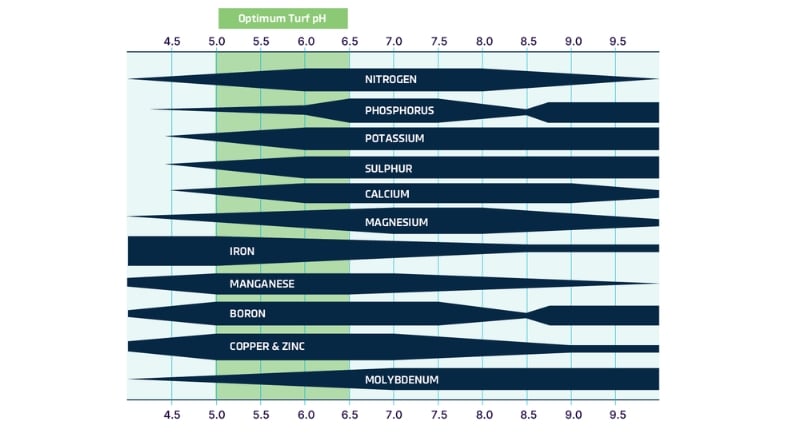
The influence of soil pH on nutrient availability
It doesn’t provide all the answers, but it helps explain why nutrients may become more or less available, how active the soil biology is likely to be and whether the existing soil conditions could influence turf performance.
Importantly, soil pH is only one part of the picture. It should always be interpreted alongside the condition of the turf, the rootzone, grass species, management practices and the objectives for the surface.
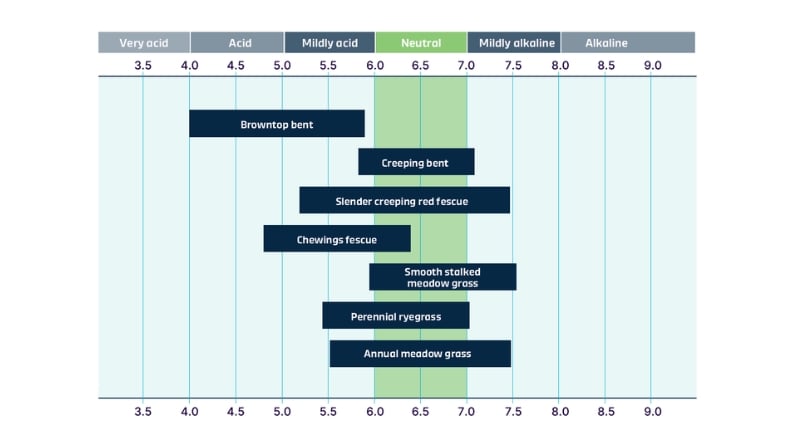
Grass seed species pH preference
Different grass species vary in their tolerance of acidic and alkaline soils. When planning renovation or overseeding, understanding these natural preferences helps ensure the chosen species is well suited to the conditions it will encounter. Selecting an appropriate grass seed mixture is therefore just as important as managing soil pH itself, particularly where pH is difficult to change.
Explore the ProSelect range for golf and fine turf or the Landscaper Pro grass seed range for sports turf and landscape applications.
What happens when soil pH is too low?
Acidic soils are common on many sports turf surfaces, particularly in areas with higher rainfall or sand-based rootzones.
As soil pH falls, the availability of some nutrients begins to change, while others become more available than the plant requires. Soil biology may also become less active, slowing processes such as organic matter breakdown and nutrient cycling.
However, a low pH doesn’t automatically mean there is a problem.
Many turf surfaces perform extremely well under naturally acidic conditions. The key question isn’t whether the pH is below an “ideal” value, but whether it is actually limiting turf performance or affecting the way the surface is managed.
If the turf is healthy, rooting well and responding as expected, the existing soil pH may simply be a characteristic of that site rather than something that requires immediate correction.
What happens when soil pH is too high?
Highly alkaline soils present a different set of challenges.
At higher pH values, nutrients such as iron, manganese and phosphorus can become less available to the plant, even when soil analysis shows they are present. This can make nutrient management more challenging and may contribute to deficiencies or reduced turf quality.
Again, the pH value alone shouldn’t determine the management programme.
A high soil pH should prompt further questions rather than immediate action.
- How is the turf performing?
- Are nutrient deficiencies visible?
- Is the irrigation water contributing to the problem?
Understanding the wider picture is far more valuable than reacting to a single number.
What influences soil pH?
Soil pH changes slowly over time and is influenced by a combination of natural processes and management practices.
Factors that commonly affect soil pH include:
- Rootzone construction materials
- Rainfall and natural leaching
- Irrigation water quality
- Organic matter
- Fertilizer programs
- Soil amendments such as lime or sulphur
For example, soils in high-rainfall areas often become more acidic over time as calcium and magnesium are gradually leached from the profile. In contrast, irrigation water with high bicarbonate levels can gradually increase soil pH.
Understanding why a soil has reached its current pH is often just as important as knowing the pH itself.
Should you change soil pH?
Not always.
While products such as lime or sulphur can be used to alter soil pH, changing the chemistry of an established sports turf rootzone is rarely quick or straightforward.
Before deciding whether to adjust soil pH, consider:
- Is the current pH limiting turf performance?
- Are nutrient availability or deficiencies affecting the surface?
- Is soil biology likely to be restricted?
- Could the management program be adapted to work with the existing soil conditions?
- Would changing the pH provide a meaningful long-term benefit?
In many situations, adapting nutrition and management to suit the existing soil is more practical than attempting to move the pH towards an “ideal” value. Corrective action is most likely to be justified where soil pH is genuinely restricting turf performance or limiting future management options.
Key takeaways
- Soil pH is one of the most useful starting points for interpreting a soil analysis.
- The pH value should always be considered alongside turf performance and other soil test results.
- Low or high soil pH doesn’t automatically mean corrective action is required.
- Understanding what has influenced soil pH is often as important as the pH itself.
- Management decisions should be based on the overall condition of the turf and the rootzone, not a single laboratory result.

