


 Whatsapp
 X
 Mail
 Copy link
Key Nutritional Considerations when Reducing Peat from Substrate
Discover the main aspects to monitor when moving ornamental plant production from peat based to peat-free or peat-reduced substrates.
On this page:
To manage the nutrition of plants grown in peat-free or peat-reduced substrates, growers need to know which questions to ask. In fact, peat is almost inert, which makes it predictable and easy to manage, while peat-alternatives vary a lot. For example:
- The characteristics of green compost vary significantly, because the source materials that contribute to its production are countless. As a consequence, nutrition need to be carefully adjusted.
- Coir naturally contains sodium, chloride, and potassium which are elements that raise the electrical conductivity (EC) of the mix.
- Bark‑based substrates require added nitrogen to compensate for nitrogen drawdown, but this can also cause an early EC spike, especially when nitrogen is supplied in fast‑acting forms like calcium nitrate.
- Nitrogen drawdown is a characteristic that bark shares with wood fiber: nitrogen immobilization in wood fiber can reach and sometimes exceed 300–400 mg N/L of wood fiber.
As thoroughly explained in our guide to peat alternatives, their main characteristics relevant for ornamental plant production can be summarized as in the table below:
| Bark | Wood fiber | Green Compost | Coir/Coconut fiber |
|---|---|---|---|
| Industrial by-product (recycled resource, lower cost) | Low bulk density (lower transport costs) | High nutrient content | Low bulk density (lower transport costs) |
| No composting required (maturation is sufficient) | High air-filled porosity (AFP) | Good water-holding capacity | High air-filled porosity (AFP) |
| Used to improve substrates' structure and aeration | Low risk of contamination | Enhances disease suppressiveness against soil-born pathogens | Easy to handle and transport |
| The above table shows the characteristics of main peat substitutes used in ornamental plant production | |||
Key Considerations when Reducing or Eliminating Peat from Substrate
- The need for calcium and other nutrient supplements. As peat content is reduced or removed, substrate pH may already be within the optimal or sub-optimal range, reducing or eliminating the need for pH correction with limestone or dolomitic lime.
- Regular monitoring of substrate pH and measuring EC. With the exception of compost, many non-peat raw materials have a lower buffering capacity than peat and are therefore more susceptible to fluctuations caused by irrigation water quality and fertilizer inputs.
- Careful blending of substrate components to achieve a balanced air-to-water ratio. This is particularly important when using lignocellulosic materials, which can sometimes lead to imbalances in substrate physical properties.
- Increased attention to nutrient leaching risks. Lignocellulosic fibres may have lower water-holding capacity and cation exchange capacity than peat, potentially increasing nutrient losses through leaching.
- Close monitoring of nitrogen availability. Many peat alternatives are associated with nitrogen immobilization, whereby microorganisms temporarily tie up nitrogen during the decomposition of organic materials. This can reduce nutrient availability to plants throughout the crop cycle and may require adjustments to fertilization strategies.
How to Grant Enough Ca and N to Ornamental Plants Grown In Peat-alternatives
Osmocote 5 as base fertilizers provides a controlled release pattern, ensuring nutrients are available when the crop actually needs them and can use them efficiently.
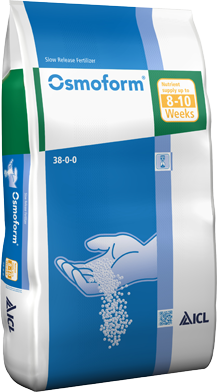
To adjust the need of nitrogen of peat-free and peat-reduced substrates, slow‑release such as Osmoform High N (8–10 weeks) and controlled‑release fertilizers like Osmocote N (5–6 months) or Cal-BOOST (2-3 months) release nitrogen gradually, reducing the risk of EC peaks.
Low‑quality CRFs or organic fertilizers, on the other hand, may release nutrients too quickly, long before young plants are able to take them up.
Conclusions
Considered the wide number of variables, personalized guidance might be needed. Our regional technical support is available: visit your country’s website to find who’s the closest ICL’s expert to you or fill in the form available by clicking on the banner at the bottom of this page



Our knowledge
Tips & tricks, disease prevention, crop and market related information
Explore our knowledge