


 Whatsapp
 X
X
 Mail
Mail
 Copy link
 Reducing red thread incidence for up to 3 months
STRI trials ground, Bingley, UK 2026
Key Conclusions
This trial clearly demonstrates and reinforces the existing knowledge that an application of a blended fertilizer containing both controlled release and conventional nitrogen improves turf color and turf quality.
In this example the improvement lasted for 12 weeks from a single application delivering 63 kg N/ha supporting the product information for the longevity of ProTurf products which is described as a 2–3 month product.
The results also provide clear evidence that a single ProTurf application will significantly reduce the turf disease red thread, for up to 3 months, improving surface quality and color.
Objective
To evaluate the effects of treatments on turf quality, color and red thread incidence over a 12-week period.
Trial Details
Trial station
STRI trials ground, Bingley, UK
Product
21-5-6+7CaO+2.5MgO
Treatments
An independent summer fertilizer trial was conducted at STRI trials ground, Bingley, UK. A perennial rygrass (Lolium perenne) dominated sward over a sandy soil was maintained as a golf course fairway for the trial over 12 weeks during the summer of 2025.
A single application of ProTurf 21-5-6 controlled release granular fertilizer was made at 30 g/m2 (supplying 63 kg N/ha split between conventional urea and controlled release N forms) as part of a larger trial examining new granular fertilizers.
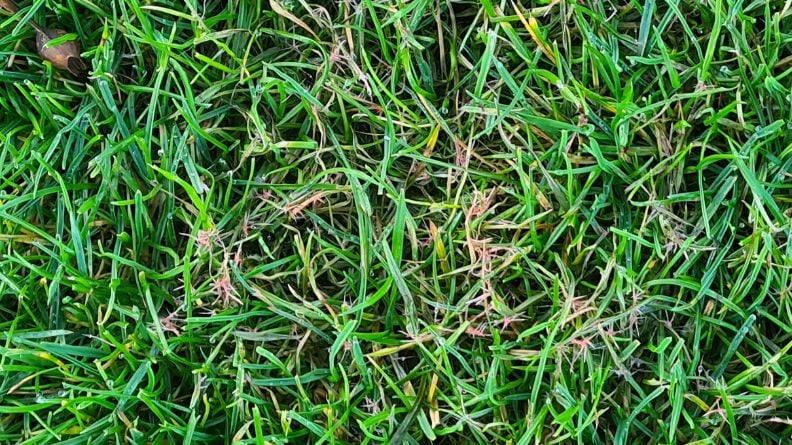
Image 1: Red thread (Laetisaria fuciformis); a fungal disease of slow growing turf, recognized by pink fungal strands which can become thin and thread like and present on the upper portion of turf leaves.
The treatment was replicated four times in 1m × 1m plots in a randomized block layout and compared with an untreated control.
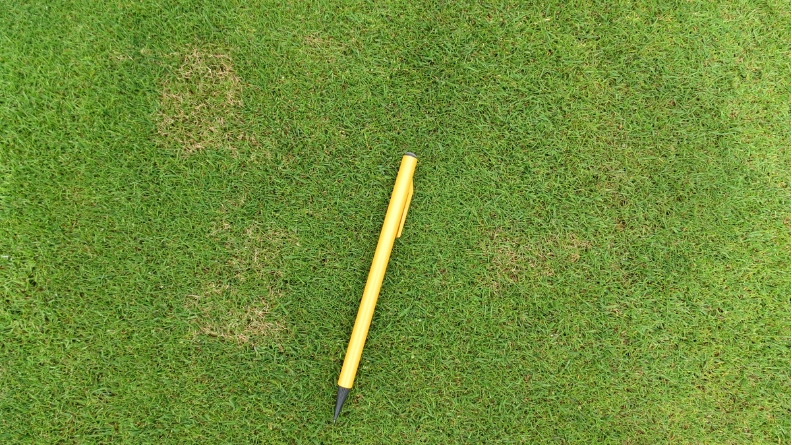
Image 2: Red thread (Laetisaria fuciformis) present in an otherwise high-quality turf surface.
Visual assessments of turf quality and turf color on a 1-10 scale, alongside visual red thread % were made fortnightly through the trial for 12 weeks.
Treatments
An independent summer fertilizer trial was conducted at STRI trials ground, Bingley, UK. A perennial rygrass (Lolium perenne) dominated sward over a sandy soil was maintained as a golf course fairway for the trial over 12 weeks during the summer of 2025.
A single application of ProTurf 21-5-6 controlled release granular fertilizer was made at 30 g/m2 (supplying 63 kg N/ha split between conventional urea and controlled release N forms) as part of a larger trial examining new granular fertilizers.
Image 1: Red thread (Laetisaria fuciformis); a fungal disease of slow growing turf, recognized by pink fungal strands which can become thin and thread like and present on the upper portion of turf leaves.
The treatment was replicated four times in 1m × 1m plots in a randomized block layout and compared with an untreated control.
Image 2: Red thread (Laetisaria fuciformis) present in an otherwise high-quality turf surface.
Visual assessments of turf quality and turf color on a 1-10 scale, alongside visual red thread % were made fortnightly through the trial for 12 weeks.
Results
Mean turf color was significantly (P<0.01) improved by the single ProTurf application from Day 7 to Day 98 (Table 1).
Mean turf quality was similarly improved (P<0.01) over the period of the trial (Table 1).
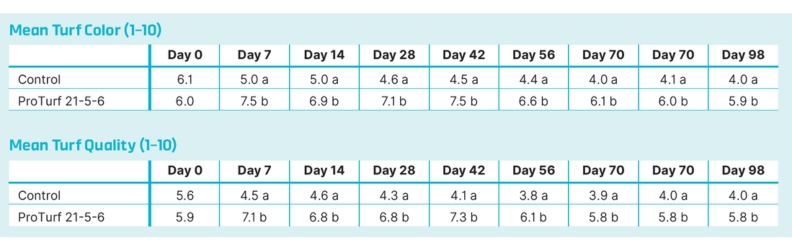
Table 1: Mean Turf Quality (1–10) and Mean Turf Color (1–10 ) assessed for the duration of the trial. Scores which share a letter indicate no significant difference
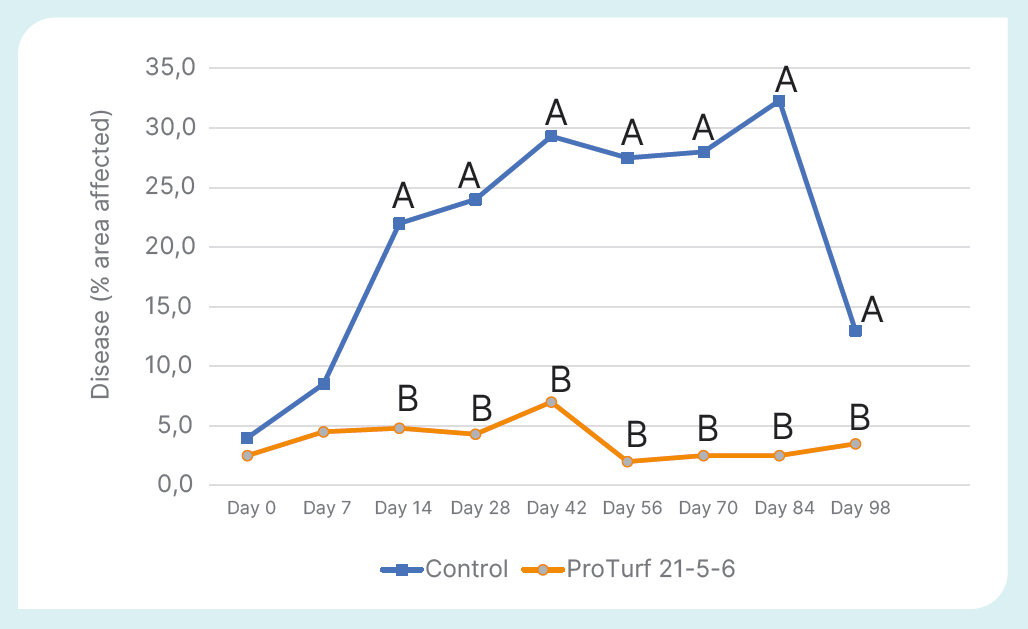
Red thread recorded on the trial area throughout the trial period. The presence of red thread (mean % of plot area affected) was significantly (P<0.01) reduced by the single application of ProTurf 21-5-6. This reduction was apparent from Day 7 through to Day 98 (Figure 1).
ProTurf

