


 Whatsapp
 X
X
 Mail
Mail
 Copy link
 Reduced nitrate-N leaching
Reaseheath College 2026
Key Conclusions
The nitrate leaching data clearly demonstrate that fertilizer formulation and application strategy have a substantial impact on nitrate mobility and environmental risk in turfgrass systems.
Despite all treatments receiving equivalent total nitrogen inputs, the timing and mode of fertilizer nutrient release markedly influenced the extent of nitrate loss.
A single application of CRF controlled release urea had significantly lower leaching than all other treatments and also provided consistent color and growth.
The selection of a CRF fertilizer also provided the best rooting, probably due to a consistent supply of nitrogen throughout the trial period.
The better rooting should lead to a healthier plant, being better adapted to moisture scarcity and providing better turf resilience.
Objective
To evaluate nitrate-nitrogen leaching from five different fertiliser types with a matched N input.
Trial Details
Trial station
Reaseheath College
Assessments
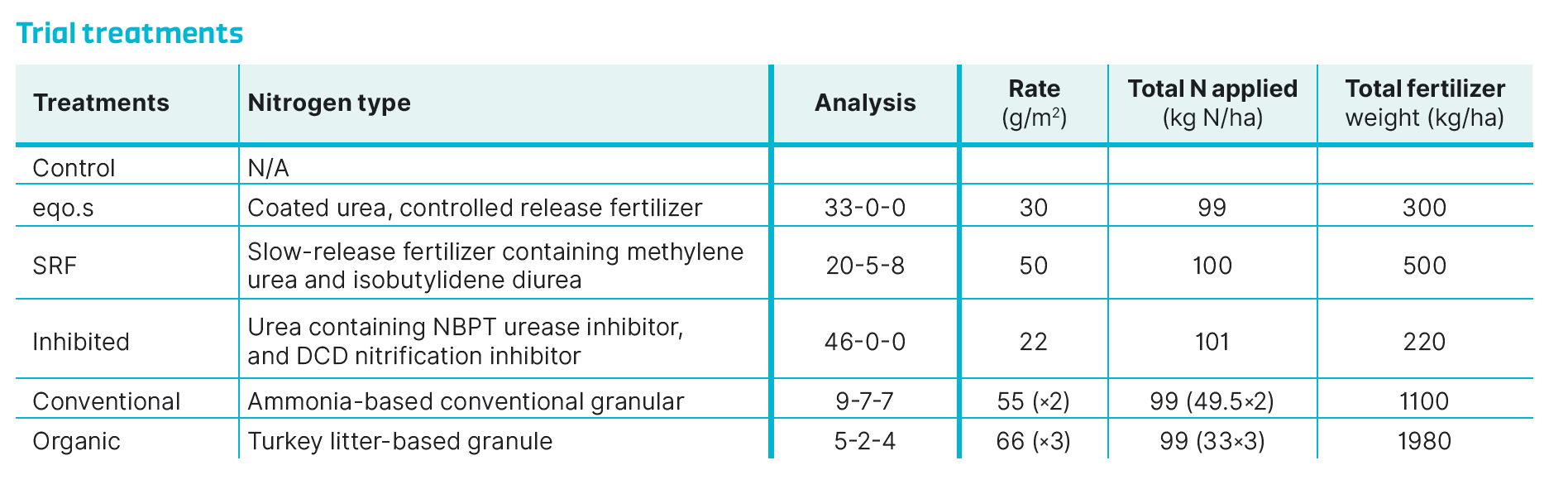
Following a 28-day establishment period, the response to a single application of eqo.s coated fertilizer, was compared to a single application of slow-release fertilizer, a single application of inhibited- release fertilizer, two applications of conventional-release fertilizer and three applications of organic fertilizer all at matched N levels of 100 kg N/ha.
Treatments
The trial was set up in the climate-controlled glasshouses at Reaseheath College, UK. Lighting was set to a 16:8-hour daynight cycle using installed LED lighting. One-liter pots were filled with equal volumes of 80:20 sand:compost based rootzone.
Lolium perenne (var. Groundforce) was seeded at a rate of 50 g/m2 and the starter fertilizer Sportsmaster 8-12-8 added at 30 g/m2. Pots were established with regular watering and light clipping to 25 mm up to day 28 from seeding.
After the 28-day establishment period, five types of granular fertilizers (Table 1) were applied to the soil surface and watered in (day 0). An additional application of conventional and organic fertilizer was made on day 21, and the third application of organic fertilizer was made on day 42 to allow matched nitrogen inputs. Each treatment was replicated six times.
Turf color was assessed visually every 7 days on a 1–10 scale. Pots were clipped weekly to 25mm, and dry biomass from clippings was recorded. Once a week, pots were watered to field capacity with a pre-calculated volume of water, and all leachate collected for 24 hours.
Leachate volume was measured and the nitrate-nitrogen content measured by colorimetric hydrazine assessment via a Thermo-Scientific Gallery auto-analyser. At day 56 the columns were dismantled and the rootzone carefully washed out to collect the roots.
Dry root biomass was measured per pot.
Treatments
The trial was set up in the climate-controlled glasshouses at Reaseheath College, UK. Lighting was set to a 16:8-hour daynight cycle using installed LED lighting. One-liter pots were filled with equal volumes of 80:20 sand:compost based rootzone.
Lolium perenne (var. Groundforce) was seeded at a rate of 50 g/m2 and the starter fertilizer Sportsmaster 8-12-8 added at 30 g/m2. Pots were established with regular watering and light clipping to 25 mm up to day 28 from seeding.
After the 28-day establishment period, five types of granular fertilizers (Table 1) were applied to the soil surface and watered in (day 0). An additional application of conventional and organic fertilizer was made on day 21, and the third application of organic fertilizer was made on day 42 to allow matched nitrogen inputs. Each treatment was replicated six times.
Turf color was assessed visually every 7 days on a 1–10 scale. Pots were clipped weekly to 25mm, and dry biomass from clippings was recorded. Once a week, pots were watered to field capacity with a pre-calculated volume of water, and all leachate collected for 24 hours.
Leachate volume was measured and the nitrate-nitrogen content measured by colorimetric hydrazine assessment via a Thermo-Scientific Gallery auto-analyser. At day 56 the columns were dismantled and the rootzone carefully washed out to collect the roots.
Dry root biomass was measured per pot.
Results
Mean dry biomass clipping weight was characterized by flushes of initial growth for the SRF and the inhibited urea products.
The conventional fertilizer produced a dual flush of growth at each application.
Biomass dry weight was lower and more consistent week to week for the CRF treatment (data not shown).
Mean turf color showed a similar response initially for all fertilizer treatments with scores around 7.
The inhibited urea treatment had the fastest decline with turf color scores below 5 at week 4.
The SRF treatment turf color dropped to below 5 at week 6.
Both the conventional and the organic fertilizers maintained scores between 7 and 5 throughout the trial because of the multiple applications.
The CRF treatment was the most consistent and maintained a turf color score between 7 and 6 throughout from the single application (data not shown).
The amount of nitrate-nitrogen leached was significantly (P<0.05) lower for the CRF and the organic fertilizer treatments (Figure 1).
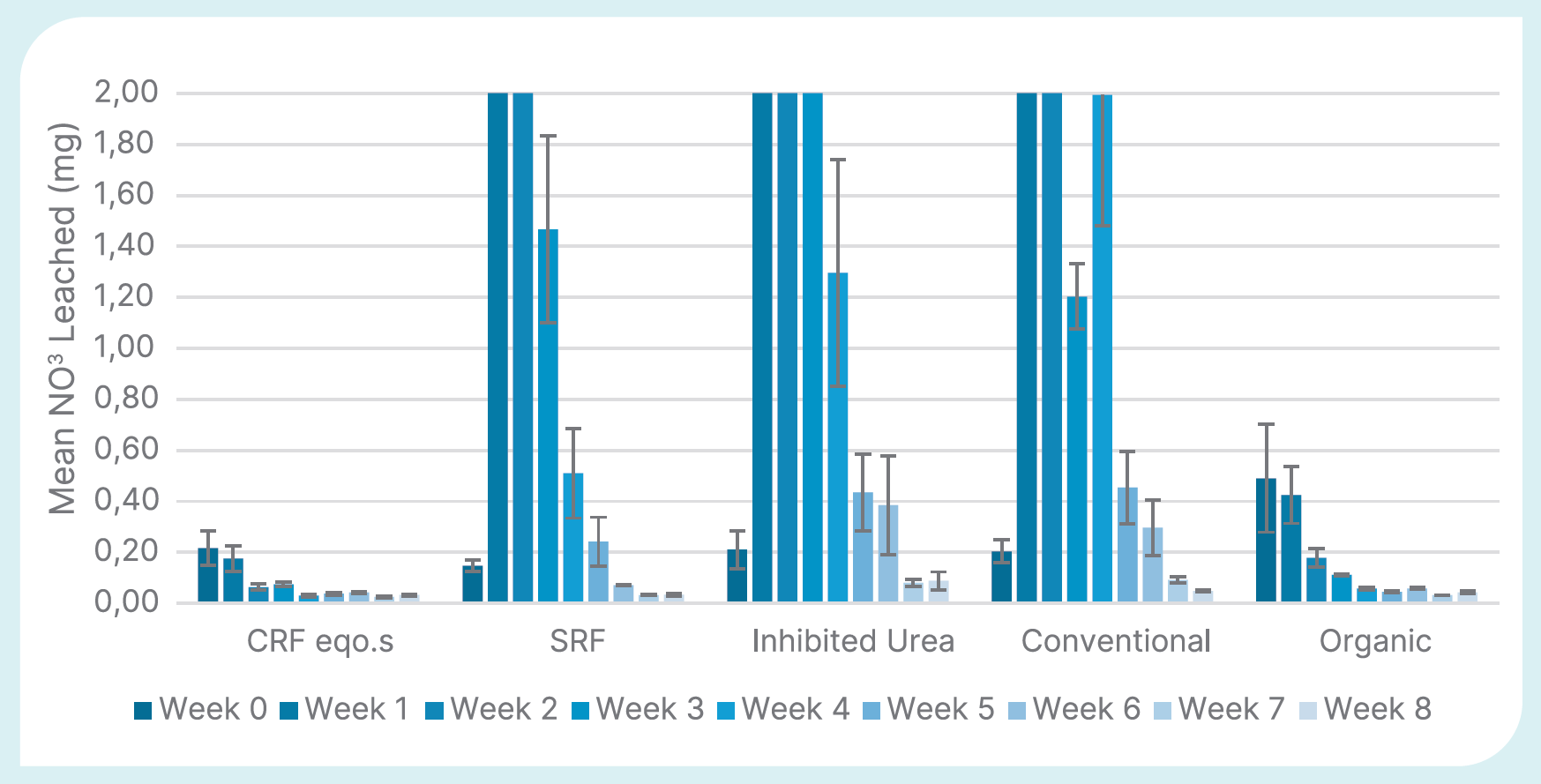
Figure 1: Mean nitrate leached (mg) per week of the trial. Error bars show standard error. NB: Y axis has been shortened to allow better visualisation.
Conventional fertilizer, SRF fertilizer and inhibited fertilizer demonstrated high leaching with a significant portion of the nitrogen applied being lost from the system and therefore unavailable for plant utilization.
Mean dry root biomass at week eight was significantly (P<0.05) better for CRF treatment than the inhibited urea and the organic treatments (Figure 2).
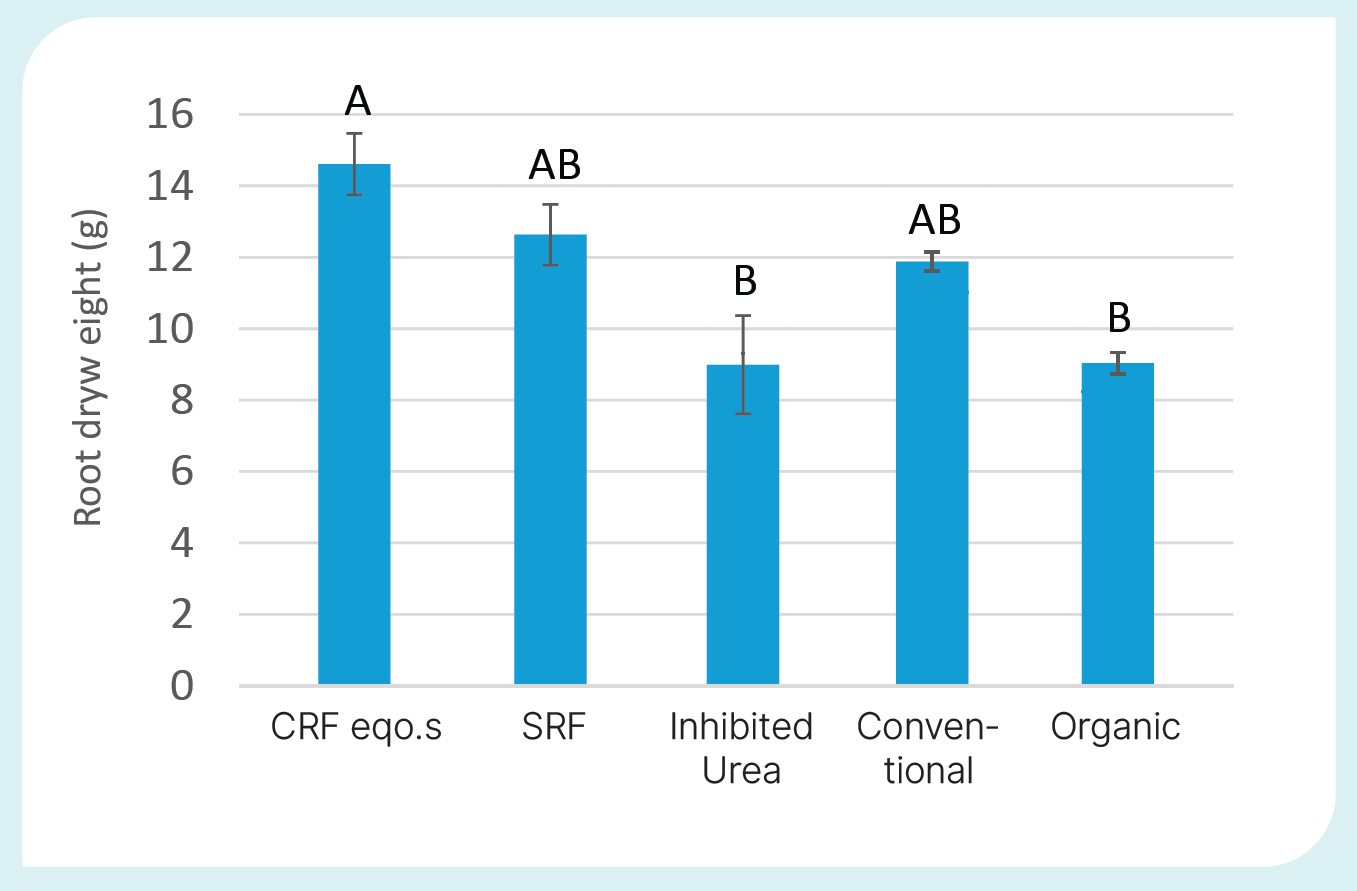
Figure 2: Mean dry root biomass at week eight. Treatments that share a letter are not significantly different.
More trials
