Whatsapp
  X
X  Mail
Mail  Copy link
 Measuring the benefits of organo-mineral fertilizers for turfgrass
Bangor University research compared Gronamic® organo-mineral fertilizers with mineral fertilizers to assess turf growth, soil response and nutrient losses.
On this page:
Choosing a fertilizer for professional turf is not only about how much growth it produces. The way nutrients are released, taken up and potentially lost from the rootzone also matters, particularly where turf quality needs to be maintained with efficient nutrient use.
To explore this, research at Bangor University compared ICL Gronamic organo-mineral fertilizers with conventional mineral fertilizers in perennial ryegrass. The study looked at grass growth alongside soil properties, microbial activity and different forms of nitrogen loss, helping build a clearer picture of how the fertilizer types behaved under the same controlled conditions.
The results showed that the Gronamic treatments produced grass growth comparable with the mineral fertilizers, while differences were also seen in nutrient losses, soil pH and microbial activity.
How Gronamic was compared
The Masters by Research project was carried out by Deniz Arslan at Bangor University using perennial ryegrass grown under controlled greenhouse conditions.
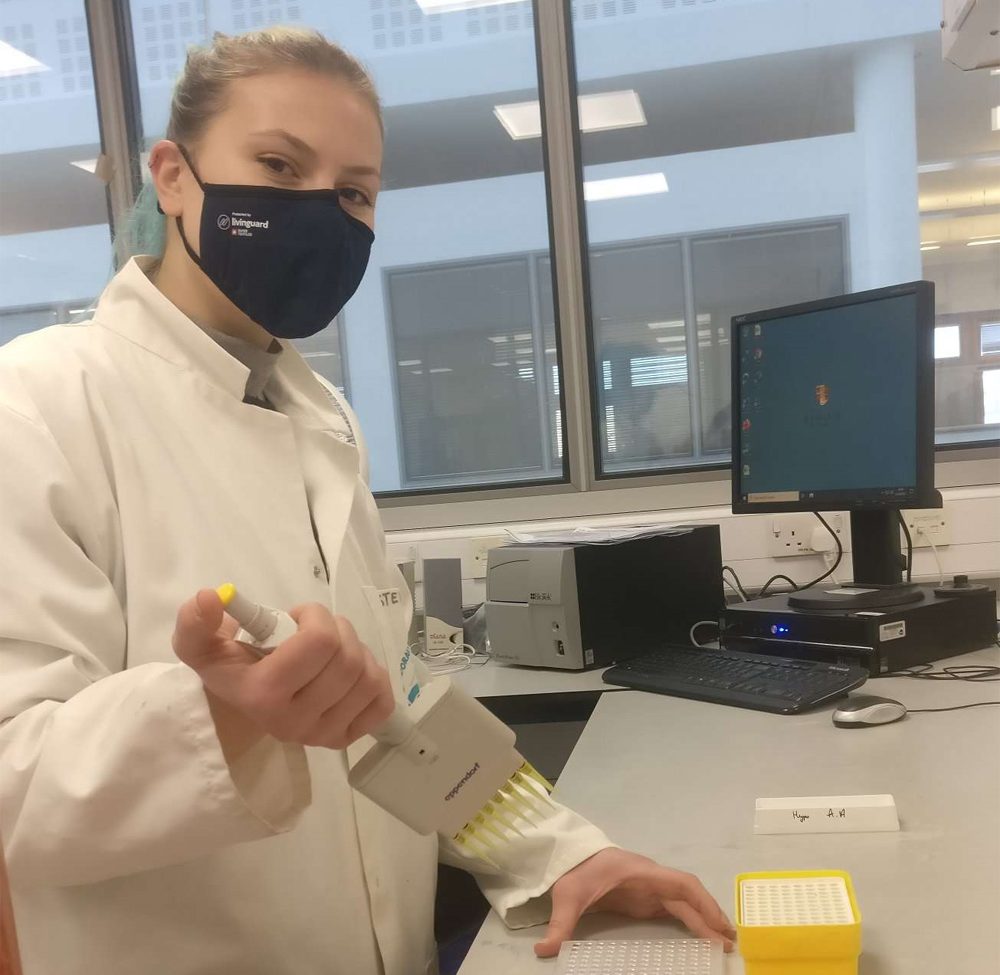
Student Denis Arslan in the lab of Bangor University, UK
Two Gronamic organo-mineral fertilizers were compared with two mineral fertilizers and an unfertilized control. The study measured grass growth, nitrogen content in clippings, soil biochemical properties, microbial activity and several routes through which nitrogen can be lost, including nitrate and ammonium leaching and gaseous emissions.
Using the same growing conditions across the treatments allowed the researchers to compare how the different fertilizer types performed and how the applied nutrients behaved within the turf system.
Comparable turfgrass growth
All fertilizer treatments produced significantly more grass dry matter than the unfertilized control.
However, there was no significant difference in dry-matter yield between the mineral and organo-mineral fertilizer treatments.
For turf managers, that is an important result. The organo-mineral treatments were able to support grass growth comparable with the mineral fertilizers under the conditions of the study.
Producing more growth is not necessarily the aim in managed turf. What matters is supplying sufficient nutrition to maintain the required turf response without creating unnecessary growth or nutrient loss.
What happened to nutrient losses?
The research also measured losses of nitrogen through leaching and gaseous emissions.
Nitrate and ammonium leaching, together with ammonia and nitrous oxide emissions, were highest from the urea-based mineral fertilizer.
The plant-based organo-mineral fertilizer recorded the lowest losses, although it was not included in the nitrous oxide experiment.
This does not mean every organo-mineral fertilizer will behave in the same way under every turf situation. It does, however, provide evidence that the source and formulation of fertilizer can influence how much applied nitrogen is retained within the turf system rather than lost.
What did the research find about soil health?
The results here were more nuanced.
Most of the soil biochemical properties measured did not differ substantially between fertilizer treatments. The main exception was soil pH, which increased significantly with the organo-mineral fertilizers.
Microbial activity also showed an initial lag in the mineral fertilizer treatments compared with the organo-mineral treatments and the unfertilized control.
That means the study does not support a broad claim that organo-mineral fertilizers automatically improve soil health. It does show measurable differences in some soil and microbial responses that warrant further investigation.
What does the research tell us?
Taken together, the results provide evidence that organo-mineral fertilizers can support professional turfgrass growth comparable with conventional mineral fertilizers.
The study also showed differences in nutrient losses between fertilizer types, with the plant-based organo-mineral treatment performing particularly well in several measurements.
The practical significance is not simply whether a fertilizer produces more grass. It is how effectively applied nutrients support the required turf response while limiting unnecessary losses from the rootzone.
Further research
The study was conducted under controlled greenhouse conditions, so the findings should not be treated as a substitute for longer-term field trials.
The thesis recommends longer agronomic experiments and comparison with a wider range of mineral fertilizers, particularly slow-release fertilizers.
The research nevertheless provides useful independent evidence for understanding how organo-mineral fertilizers can perform in professional turf systems.