


 Whatsapp
 X
X
 Mail
Mail
 Copy link
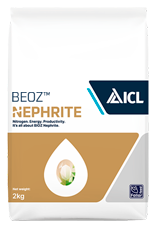


Nephrite
Nephrite is a technology to boost nitrogen metabolism throughout the crop cycle. Nitrogen is one of the most required nutrients by crops and is demanded throughout the whole crop cycle. We took a long period of studies, more than 6 years, to identify the factors that interfere in this process. From that we developed a new technology to enhance biological nitrogen fixation in legumes and nitrogen metabolism in other crops.
Nephrite is designed to stimulate and support biological nitrogen fixation throughout the crop cycle, improving fixation efficiency to deliver more energy for the plants. By increasing the rate that nitrogen is transformed into proteins, crops generate heavier grains boosting productivity in the field.
Nephrite has six modes of action:
- Nephrite stimulates the synthesis of auxins in the aerial part of the plants, which are then sent to the root system
- In the root system, auxins stimulate the synthesis of cytokinins
- Increases the efficiency of biological nitrogen fixation by reducing energy expenditure
- Between 30 and 60% of the energy supplied to nitrogenase can be lost as H2
- Nephrite activates the hydrogenase enzyme, which will recycle the hydrogen gas releasing energy for the process
- Savings of 11% to 25% of carbon, which can now be used by the plant to grow leaves, pods, and grains.
Nephrite reduces ethylene biosynthesis, keeping the nodules alive longer preventing their premature death.
In addition to the hormonal promoters, Nephrite provides essential nutrients for the biological fixation process, ensuring its operation until the end of the cycle.
- Provides continuous formation of young, strong nodules, by modulating the plant's hormonal balance.
- Makes nitrogen fixation much more efficient, providing more energy for plant growth.
- Quick conversion of nitrogen provided by nodules into proteins to produce heavier grains.
- Maintains the supply of energy to the nodules.
- Reduces the formation of ethylene in the plant, avoiding premature death of the nodules.
- Provides essential elements to keep the nodules physiologically active.
Rice and wheat: 500 g/ha, foliar application at the beginning of tillering.
Beans: 300 g/ha, foliar application in the vegetative phase from V4 (3rd unfolded trifoliate leaf).
Maize: 500 g/ha, foliar application between stages V4-V6 (from 4 to 6 leaves).
Soybeans: 300 g/ha, foliar application between stages V3-V5 (3-5th unfolded tripartite leaf).
For use on other crops, please contact our experts for advice.
Digital Tools
Access calculators to improve nutrient management and boost productivity.
Brand Details
Read more about the benefits of biostimulants, relevant crops for Beoz® , and more
Learn more about Beoz ®


Explore Our Full Product Range
Find the perfect solution for every agricultural need
BEOZ®

Adamite
See productBEOZ®

Garnet
See productBEOZ®

Goldstone
See productBEOZ®

Opal
See productBEOZ®

Sard
See productBEOZ®
ActiRise
See productExplore Topics
